Estero Dumpster Guide
What Size Dumpster Do I Need in Estero?
Picking a dumpster size comes down to two things: how much space your debris takes up and how much it weighs. Get it right and the job stays in one container. Get it wrong and you are either paying to haul air in a half-empty box or calling for a second rental halfway through. This guide maps the four common roll-off sizes to the projects Estero homeowners actually run.
The Short Answer
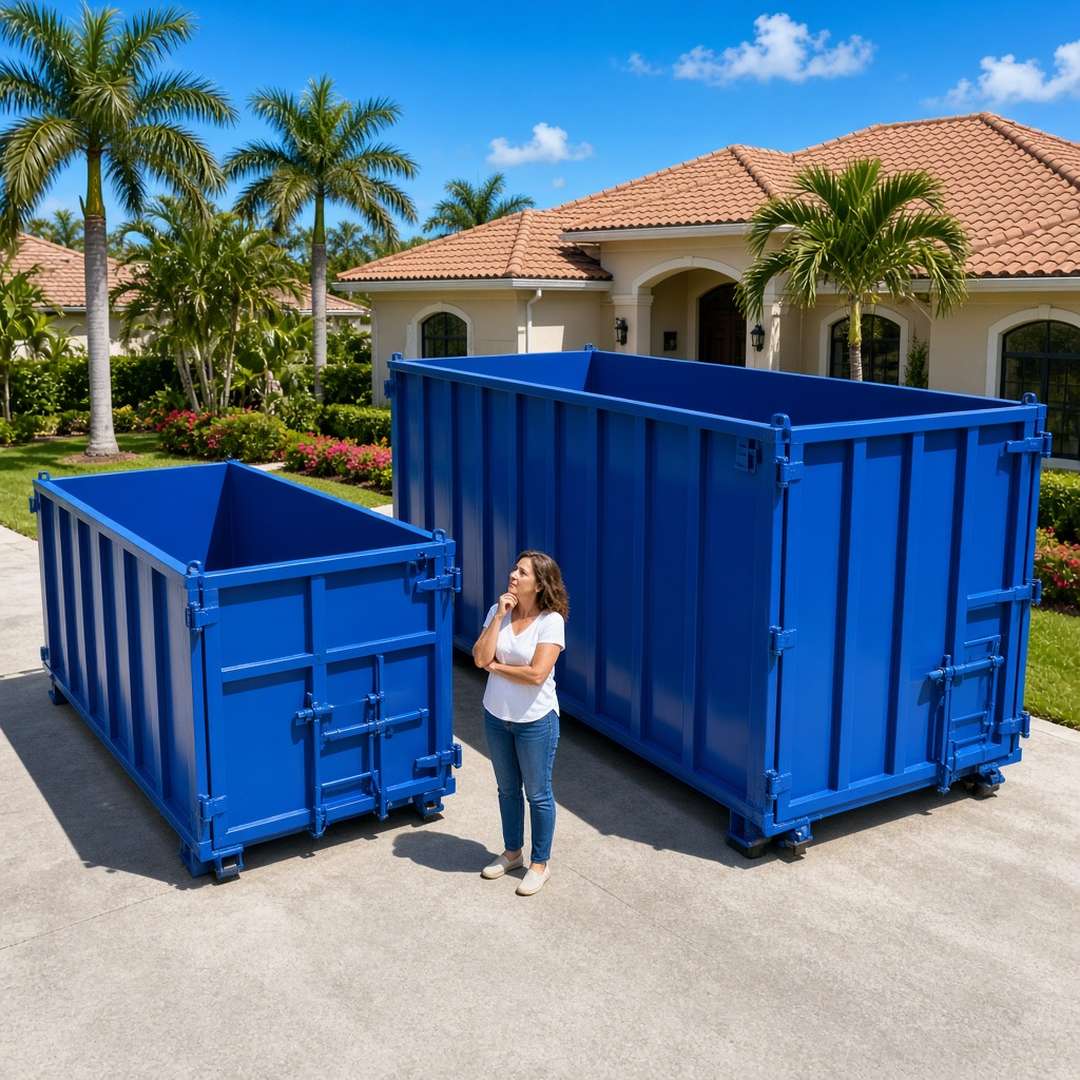
For most Estero home projects, a 20-yard dumpster is the safe default. It handles a whole-house flooring job, a single-story roof tear-off, or a large cleanout, and it still loads by hand. Step down to a 10-yard only when the debris is dense and the job is small — a bathroom gut or a concrete removal. Step up to a 30 or 40-yard for whole-home renovations, new construction, or major storm debris.
Match the Size to the Job
Estero's housing stock is young — Census figures put the median build year around 2004 — so the common jobs here are remodels and roof work on homes reaching their first big repair cycle, plus new construction east of I-75. Here is how the sizes line up.
10-yard — small, dense jobs. A single bathroom demolition, one room of tile or flooring, or a limited concrete removal. Dense debris hits the weight limit before it fills the box, so going bigger just costs more for the same tonnage.
20-yard — the whole-house workhorse. Flooring pulled across a house, a single-story shingle tear-off, a large garage or estate cleanout. This is the size most homeowners land on.
30-yard — full renovations. A gut remodel, a room addition, or construction cleanup where bulky framing and drywall pile up. The taller walls suit volume over weight.
40-yard — new builds and big cleanups. New construction, large demolition, or major storm debris after a hurricane. For dense material like concrete, drop back to a smaller box — the 40-yard hits its weight cap while looking half-empty.
The Two Questions That Decide It
First, is the debris dense or bulky? Concrete, tile, dirt, and roofing shingles are heavy — they reach the weight limit fast, so size down. Framing, drywall, cabinetry, furniture, and yard debris are bulky but light — they fill volume, so size up.
Second, how much of the house does the project touch? One room points to a 10 or 20-yard. A whole house or new construction points to a 30 or 40-yard. When you land between two sizes, the larger box is the cheaper mistake, because a second haul costs more than the extra capacity.
A Note on Driveways and Placement
Estero's newer homes have paver driveways and sit in gated communities. A roll-off should go on protective boards to guard the pavers, and many homeowner associations limit how long a container can stay in view. Confirm your community's rules before the box arrives so placement does not become a problem. The dumpster sizes guide breaks down each box in more detail.
If you are weighing a specific project, call (239) 880-1643 and describe the job — a local provider will confirm the size that fits. You can also see how sizing works for a residential cleanout or a construction build.
Frequently asked
Frequently Asked Questions
What is the most popular dumpster size?
The 20-yard is the most popular size for home projects because it balances capacity and handling. It holds about eight pickup loads, loads by hand, and covers the majority of remodels and cleanouts without risking an overweight load on mixed debris. Homeowners move off the 20-yard only when the debris is unusually heavy, pointing to a 10-yard, or the project is a full renovation, pointing to a 30-yard.
Can I go too big with a dumpster?
Going larger than needed mainly costs more for capacity you do not use, but with dense debris a bigger box can also mislead you into overloading past the weight limit. The better approach is to match the box to the debris type: dense material in a smaller box, bulky material in a larger one. When a job sits between sizes, the larger box is the safer call, since a second haul costs more than the unused room.
How many pickup truck loads fit in a dumpster?
A 10-yard dumpster holds roughly four pickup-truck loads, a 20-yard about eight, a 30-yard about twelve, and a 40-yard about sixteen. These are rough equivalents, since a pickup bed and a roll-off pack differently, but they help gauge scale. If you have been clearing a project load by load, counting the trips you would otherwise make gives a quick read on the size you need.
Does debris type change the size I need?
Yes, debris type is as important as volume. Dense material — concrete, tile, dirt, roofing — reaches a container's weight limit well before it fills the space, so a smaller box is correct even when it looks underused. Bulky, light material — framing, furniture, yard debris — fills the volume first, so a larger box clears more per haul. Telling a provider what the debris is lets them size by weight as well as space.
Call Now for Dumpster Rental in Estero
Reach a local roll-off provider serving Estero and Lee County, FL.